

The Lasting Impact of Investing in Local Government
Q4 2026 | Vol. 76, Issue 4
More than five years after the American Rescue Plan (ARP) Act was signed into law, municipalities across North Carolina are approaching the end of a historic period of investment. Through ARP funding, towns were able to address long-standing infrastructure needs, improve public amenities and undertake projects that may not have otherwise been possible. As the final expenditure deadline of December 31, 2026, approaches, communities are reflecting on the lasting impact those investments have made.
Across the state, towns used ARP funds to tackle local priorities. Communities including Newton Grove, Spruce Pine, and Pollocksville completed critical water system improvements, while Spencer, Pleasant Garden, and Wilkesboro expanded recreational opportunities for residents. Other municipalities invested in public safety, including Hertford's purchase of a new fire truck and Beech Mountain's establishment of an EMT station atop the mountain, helping improve emergency response capabilities for their communities. To read more about these ARP stories from across the state, check out our MAS blog.
While many of ARP's most visible legacies can be found in completed projects and improved services, another impact took shape behind the scenes. Local finance officers and administrative staff were tasked with navigating complex reporting requirements, procurement rules, compliance obligations and accounting procedures.
As part of the ARP distribution, the N.C. General Assembly directed a portion of state funds to the League to support municipalities as they invested their ARP dollars. What soon became clear was that many towns needed financial and accounting assistance, leading to the creation of the League's Municipal Accounting Services (MAS) team. Over the past three years, MAS has provided support for grant management, financial software upgrades, cybersecurity updates, and hands-on accounting mentorship through its Accounting Instruction & Mentorship (AIM) program.
Over the past three years, the MAS team has connected with all 551 municipalities in North Carolina and provided dedicated services to 300 towns. The team has conducted more than 15,000 activities, including on-site visits, phone consultations, and technical assistance, while more than 100 communities have received support from a dedicated accounting mentor.
For many local government finance professionals, that support extended beyond technical assistance. Through programs such as AIM, the MAS Software Summit and one-on-one mentorship, League staff helped build knowledge, confidence and professional networks for municipal employees navigating increasingly complex responsibilities. Finance Officer Lynne Conner of Aulander said the guidance she received made a lasting difference.
"I truly appreciate [the League] and [its] team always going the extra mile. I say this wholeheartedly: without the support and services of the NCLM staff, I would have had to return to my previous employment," Conner said. "This role is more challenging than anyone realizes [and they] gave me the resources and hope to overcome those challenges."
For some communities, MAS support arrived at a critical moment. After the Town of Pink Hill lost nearly its entire staff, Lauren Smith was hired as town clerk with little accounting experience and few opportunities to pursue traditional training. With a small staff and daily operations to maintain, leaving town hall for extended classes was not feasible. Through the AIM program, Smith received hands-on training and mentorship in her own community, helping her build the knowledge and confidence needed to navigate the role.

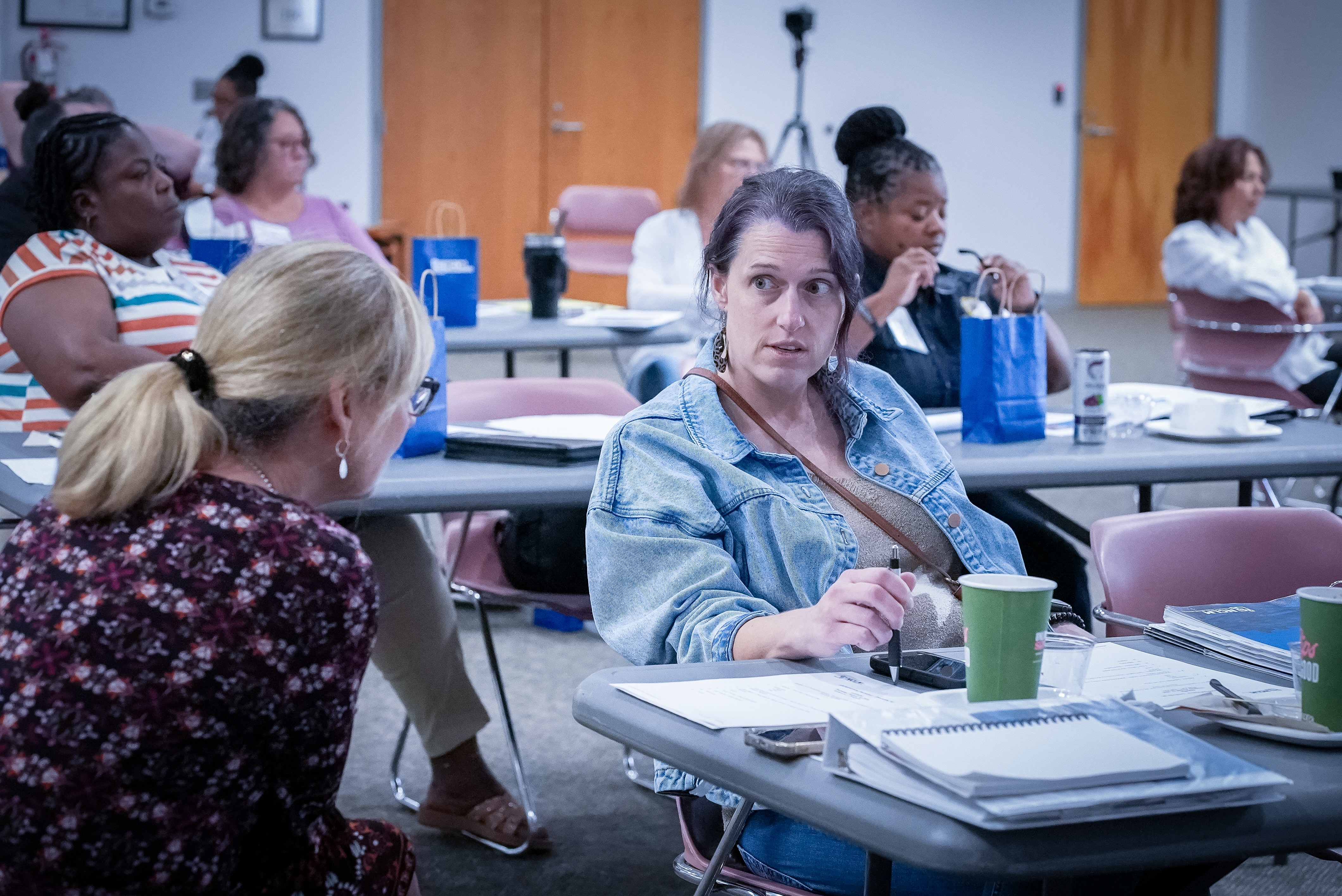
"It was the difference between us getting some training and not getting any training at all," Smith said. "The program helped us understand all the things we didn't even know we were supposed to be doing. It showed us more efficient ways to do things and gave us someone we could call when questions came up. For small towns that don't have people to spare for training, it made a big impact."
One of MAS' most enduring legacies is a comprehensive accounting manual that will continue supporting local finance professionals long after the program concludes. The program has also helped build lasting peer networks through regional networking events and software summits, creating opportunities for municipal staff to learn from one another and share solutions to common challenges.
The reasons why the Municipal Accounting Services program was built haven’t gone away. Limited staff capacity, workforce turnover, complex compliance requirements and outdated systems remain real challenges for many communities. Through hands-on support, towns strengthened financial practices, completed audits, and built confidence in managing public funds—gains that continue long after individual projects are complete.
As ARP funding comes to an end, the League is working to ensure the long term sustainability of the services it helped establish. Throughout the program, the League has leveraged support from outside organizations, including Camber Foundation and the SECU Foundation, to expand services to even more municipalities. The League has secured additional support through the end of 2027 and continues to pursue opportunities with state partners and other funders.
The legacy of these investments extends beyond any single project or grant cycle. Across North Carolina, communities used ARP funding to improve infrastructure, strengthen services and address local priorities. At the same time, programs like Municipal Accounting Services helped build the knowledge, systems and professional networks that support local governments long after the funding is spent. As municipalities face new challenges and opportunities in the years ahead, the value of investing in local government capacity remains as important as ever.

About the author
Stephanie Hughes
Communications & Multimedia Strategist - ARP
Supports the League’s communication strategies as to improving awareness of the American Rescue Plan.
