

AIMing for a Path Forward in Municipal Finance
Q2 2026 | Vol. 76, Issue 2
For North Carolina’s small towns, sound financial management allows communities to operate safely, plan confidently and serve residents effectively. Many towns manage complex finance responsibilities with limited staff, limited training opportunities and few places to turn for hands-on support. Recognizing this gap, the League developed a program designed not just to fix problems, but to build lasting financial capacity at the local level.
That commitment first took shape through the League’s Municipal Accounting Services (MAS) program, introduced in September 2022 as part of the League’s American Rescue Plan (ARP) service offerings. MAS was created to strengthen financial accuracy and accountability for smaller local governments. Members working with MAS received a full financial accounting software upgrade, along with hands-on accounting support and training from designated League staff—services much-needed, but too costly and daunting for many to take on. To further develop this support, the League developed the Accounting Instruction & Mentorship (AIM) program.
A key component of the AIM program is access to the League’s proprietary AIM Manual—a 12-chapter how-to guide that walks through the basics of governmental accounting and financial management. The chapters cover topics including budget preparation, cash management and year-end audits.

Delivering Measurable Impact
Nearly two years after its launch, the AIM program has evolved into an approximately six‑month training and mentorship experience that works through the manual alongside a dedicated mentor. In that time, the League worked with four separate cohorts comprised of 56 towns across North Carolina to help them grow in their financial understanding.
In addition to the in-person mentorship that walks through the chapters of the AIM manual, the program also includes ongoing webinar trainings and access to exclusive on-demand trainings that reinforce and extend those mentorship sessions. For town leaders, the value of AIM lies in both the knowledge gained and the confidence it builds.
“About the AIM program, I can’t say it enough—I think it’s such an important tool that people should utilize if they have the ability,” Sue Harrell, mayor pro tem for the Town of Oak City, said. “If we came upon a chapter talking about a certain policy, and I found out we didn’t have one, they were really good about helping me, giving examples … and then pointing out what we could change to make it better.”
As participation in AIM has grown, so too has interest in expanding the program’s reach.
Expanding Access Through Grants
To support the continuation of the successful program, the League was awarded additional grants that allow the program to extend beyond its initial cohorts.
Camber Foundation is an emerging foundation that provides grants to nonprofit organizations in eastern North Carolina working to address existing needs through community-driven solutions. Camber chose to invest in the League’s AIM program because it aligns with the Foundation’s commitment to support organizations that strengthen communities to boost the quality of life and prosperity of the individuals and families within them.
The Foundation’s grant has allowed the League to include additional towns in its third program cohort as well as to provide day-long financial training to towns even beyond those in the AIM program itself.
This past spring, the League hosted its Comprehensive Fiscal Training for Local Governments in three eastern North Carolina towns: Clayton, Morehead City and Leland. This training covers all the basics that government leaders need to know about municipal finance. Beyond basic bookkeeping, the course examines how municipal administrators and elected board members work together and highlights best practices that support a town’s financial health. Over 100 local officials attended these day-long sessions, including Christina Lozano, who was on her second day as a finance technician for the Town of Newport—one of the towns that participated in the first AIM cohort.
Lozano shared how the training gave her early insight into how the individual responsibilities of her role connect to the larger systems that keep local government running.
“I thought it was great timing because I am in my training week, so learning the basics this week is the best way to get a foundation,” Lozano said. “When you’re doing a job, you’re just seeing it as the daily grind…you just see the little tasks, but when you piece it all together and see the big picture—how it works with the audits and how that keeps government moving—I think that was really important to know for my first week.”
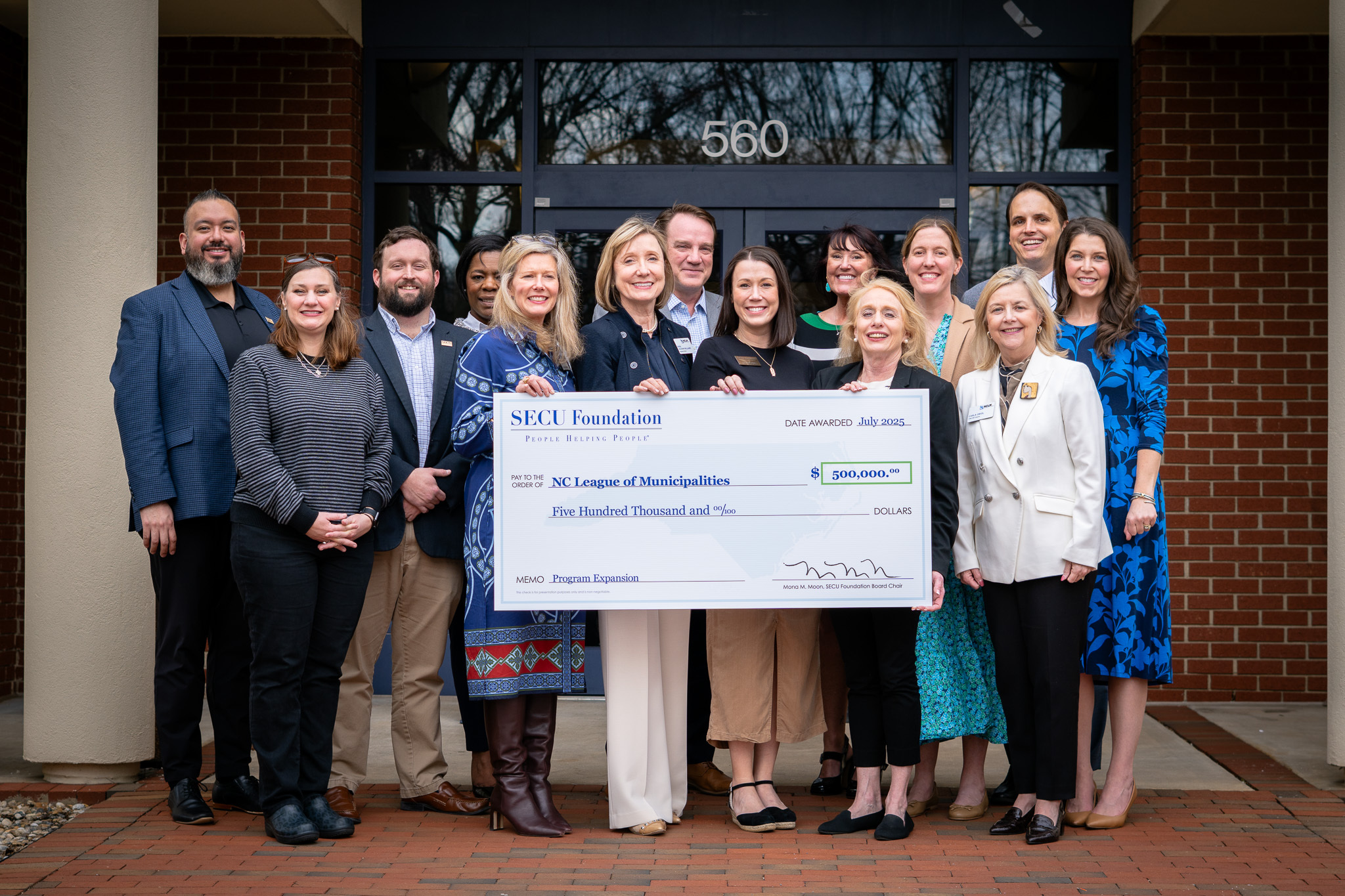
Lozano’s experience reflects the type of impact these grant-supported trainings are designed to have for local officials across the state. The program also received a grant from the SECU Foundation in support of strengthening financial capacity in North Carolina communities. Funded by SECU members, the SECU Foundation invests in high-impact education and community development initiatives that promote long-term stability and resilience across the state.
Their grant is funding the expansion of the AIM program to towns in the central and western parts of the state. In addition to creating an opportunity for towns to engage in a new AIM cohort, it will also allow for the inclusion of in-person trainings focused on financial management and the creation of strategic plans in the fall of 2026.
Strengthening Connections Across Towns
An important aspect of the AIM program, beyond the training, is forming a network of towns across the state that have dealt with similar challenges and have now gone through the same training program. It is the League’s goal to facilitate connection amongst these towns and to provide opportunities for town staff to meet and share experiences.
This summer and fall, the MAS team is hosting a series of three networking events for participating towns in central and eastern NC. The events in Lewisville, Greenville and Fayetteville, will provide an opportunity for towns to build relationships, hear from the League about opportunities for continued engagement, and enjoy a meal together. The grant from the Camber Foundation is helping to support some of these events.
Supporting Long-Term Stability
In the time since its launch, the AIM program has grown well beyond its initial scope. Participating towns leave with stronger financial systems, a clearer understanding of municipal finance and a network of peers facing similar challenges. As finance officers continue to navigate the complexities of municipal finance, AIM demonstrates how targeted, hands-on training and mentorship can help make a lasting difference in the strength and stability of North Carolina’s communities.

About the author
Stephanie Hughes
Communications & Multimedia Strategist - ARP
Supports the League’s communication strategies as to improving awareness of the American Rescue Plan.
